
First published by The Journal Gazette
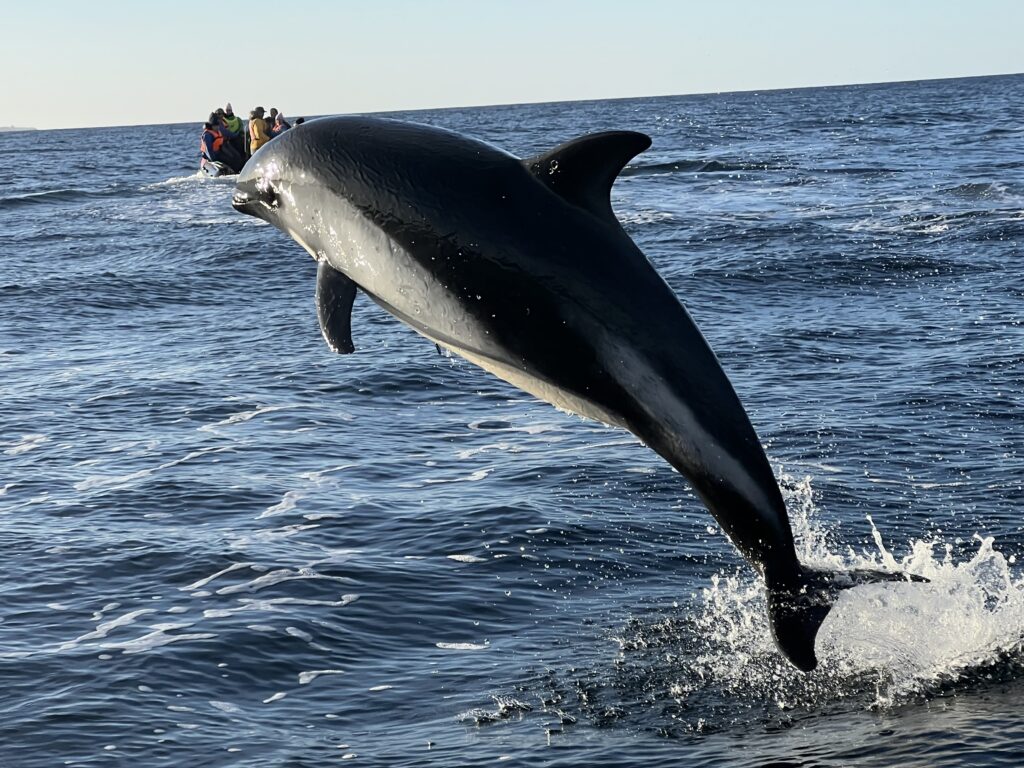
I sat up front tightly holding a rope that ran on top of the boat’s right inflatable tube. The skipper roared the eight-passenger boat’s engine to catch up to the fast-moving dolphins. With my other hand, I nervously held my iPhone while snapping pictures.
I was taking a huge risk. My iPhone could easily slip from my hand and land in the ocean. But I wanted a decent picture of a dolphin. I got one.
It was a chilly afternoon and I was on the Punta Arenas Dolphin and Wildlife Watching tour. The cold saltwater of the Strait of Magellan, a natural passage between the Atlantic and Pacific, kept splashing up and needling my face, as the boat cut through the water while chasing the dolphins. The dolphins would sporadically jump out of the water and spin in the air. But their acrobatic displays did not last long. By the time we got close to the dolphins they would disappear.
“Sometimes we see dolphins and sometimes we do not,” a tour guide said as the skipper slowed the boat to a crawl. “We do not feed or capture the dolphins. We only want to watch them in their natural habitat.”
I was wearing tour-provided waist-high waders, an extra-long rain jacket and a tight orange life jacket. My sunglasses kept getting water spots on the lenses. I was hesitant to take them off as I was not wearing a neck string to secure them.
I occasionally shivered as the cold weather and water affected me. But no matter how uncomfortable I was, I was thrilled knowing that I was at the end of the world. Punta Arenas is near the southern tip of Chile at the bottom of South America.
When we arrived back at shore, the skipper steered the boat onto the portion of a trailer that was in the water. It was a balancing act getting off the boat. I had to lift one leg over the inflatable tube. Then I had to place my foot on the trailer ball and then lift my other leg over and jump over water onto the beach. When all the tourists got off the boat, the skipper struggled to get the boat out of the water. The trailer was attached to a minivan. The minivan got stuck in the sand while pulling the trailer. After repeated attempts by several frustrated people, the minivan was successful.
Was this a well thought out tour by the tour guide? I don’t know. We were technically harassing the dolphins and there was trouble simply getting the boat out of the water. But I had a great time and I would take the tour again.
Punta Arenas is in Chile’s southern-most Patagonia region. It has a popular waterfront walk that includes a small plaza with the city’s name in large letters. It is popular for people to get their pictures next to the city’s name. But the walkway also has other stunning monuments. I walked the walkway a few times. I had no expectations, and I was not looking for anything. In the afternoons, the noise from the cars on the road next to the walkway was distracting. But on a Sunday morning with few cars and few people, I had a very peaceful journey.
When I left the waterfront walk and I crossed the road drivers always stopped. There are no pedestrian signals, so I had to rely on the courtesy of drivers. The city is walkable and there are several cafes and restaurants. Chocolatta is my favorite café. I enjoyed its famous hot chocolate. Estilo Magallanico is my favorite restaurant. I ate a fantastic steak with creamy mashed potatoes. I admit I take my Midwestern diet with me no matter where I go.
It is a long flight to Punta Arenas, but it is worth it. I flew Delta and went on its 10-hour flight from Atlanta to Santiago, Chile. Upon entry into Chile, I was given an important tourist card that resembles a receipt. I almost tossed it as I have a habit of disregarding receipts.
I then walked across the street from Santiago’s international airport to its domestic airport, which is in a separate building. I took a four-hour flight to Punta Arenas. At the Punta Arenas airport, there are taxis and Uber service is available. I paid my taxi driver $20 U.S.; some Chileans gladly accept the U.S. dollar over the Chilean peso.
I split my time staying at two hotels. The Hotel Diego de Almagro is a decent low-cost option by the waterfront walk on the edge of downtown. Six blocks away in the heart of the city is the upper-scale Hotel Cabo de Hornos. Both hotels required to see the tourist card I received upon entry into Chile.
I went during the offseason, so my travel costs were reasonable. It was a great decision.